


PART II. UN80 General Assembly High-Level Week 2025
- Ariana Lugay

- Oct 7, 2025
- 4 min read
Updated: Oct 30, 2025
For the second part of the MUNute Brief’s special coverage, we take a glimpse at some of the key conferences and meetings held during this year’s on the United Nations General Assembly High-Level Week.
Throughout the course of this week-long event, several conferences were held on key global issues. This includes the landmark affirming of the recognition of a Palestinian state by many nations, the first installment of a biennial summit to call for reinforced climate action, a multi-stakeholder meeting to foster dialogue for artificial intelligence governance, and a review of the overall situation of the Rohingya Muslims and other minorities in Myanmar.
We are once again reminded of the United Nations’ purpose, eight decades after its founding—to foster diplomatic dialogue and international cooperation in the addressing of global issues, whilst upholding the principles of international law.

Conference on Palestine & Two-State Solution
On September 22nd, the High-level International Conference for the Peaceful Settlement of the Question of Palestine and the Implementation of the Two-State Solution was held, presided by France and Saudi Arabia. This was done following an initial conference in July 2025, in which the delegates voiced “unwavering support” for the Two-State Solution and pressed for the recognition of Palestinian statehood. It also created the historic New York Declaration, which passed at the UNGA on September 12th, backed by 142 member-states.
In this conference, many nations affirmed their recognition of the State of Palestine, notably France. In his speech, President Emmanuel Macron of France calls out the other nations who are there today to affirm their recognition, such as the United Kingdom. He also calls for peace in the Middle East, stating, “Peace is much more difficult. It demands much more of us than all wars.”
Furthermore, President Mahmoud Abbas of the State of Palestine praised the New York Declaration in his own speech, stating that it “marked the beginning of an irreversible path toward ending the humanitarian catastrophe and ending occupation” and was “the embodiment of an independent State of Palestine.”

Climate Summit/Summit for a Sustainable, Inclusive and Resilient Global Economy
On September 24th, the First Biennial Summit for a Sustainable, Inclusive and Resilient Global Economy was held. The summit, which was mandated by the Pact for the Future, aimed to “take stock of commitments related to financing the SDGs, foster an inclusive dialogue … and explore ways to strengthen collaboration between multilateral institutions.” The UN Secretary-General António Guterres also called on all to “strengthen our cooperation and take decisive steps toward a more resilient, inclusive, and sustainable future”.
On the same day, a High-Level Special Event on Climate Action was also held. In his opening speech, Guterres emphasised that “clean is competitive, and climate action is imperative,” and underlined that climate ambition must be embedded in our economic systems. The event also served as a platform for states to present new or updated climate pledges ahead of COP30 2025, which will be held in Brazil. Over 100 countries took actions such as announcing emissions reduction targets, renewable energy rollouts, methane strategies, or fossil fuel phaseouts during the summit.
Launch of the Global Dialogue on AI Governance
A High-Level Multi-Stakeholder Informal Meeting was held on September 25th to launch the Global Dialogue on Artificial Intelligence Governance. In his opening, Secretary-General António underscored the idea that governance must be inclusive, not dominated by a few. Here, Guterres laid out three foundational pillars: policy, science, and capacity. The Dialogue is designed to complement existing regional and multilateral AI initiatives, and to align governance regimes, promote interoperability, bolster oversight, and encourage open innovation.
“Today, we launch the Global Dialogue on AI Governance … the world’s principal venue for collective focus on this transformative technology. [For] the first time, every country will have a seat at the table of AI.”
António Guterres
The meeting convened Member States, observers, UN agencies, civil society, and technical actors to chart the Dialogue’s structure and objectives. Here, Guterres laid out three foundational pillars: policy, science, and capacity. The Dialogue is designed to complement existing regional and multilateral AI initiatives, and to align governance regimes, promote interoperability, bolster oversight, and encourage open innovation.
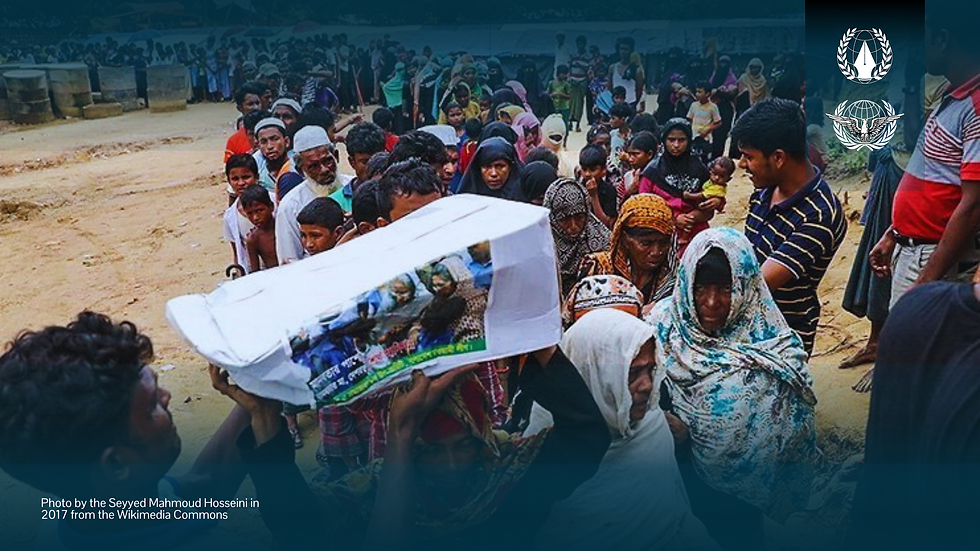
Situation of Rohingya Muslims and Other Minorities in Myanmar
On September 30th, the UNGA held the High-Level Conference on the Situation of Rohingya Muslims and Other Minorities in Myanmar. A central aim of the conference was “to review the overall crisis … to propose a comprehensive, innovative, concrete and time-bound plan” for durable resolution.
The UN Secretary-General António Guterres (through his Chef de Cabinet) described the Rohingya crisis as a “deepening tragedy” undermining regional stability and human dignity. He asserted that while Myanmar is the Rohingya’s homeland, “conditions in Myanmar’s Rakhine State impede the possibility of their safe, voluntary, dignified and sustainable return.”
High Commissioner for Human Rights Volker Türk accused both Myanmar’s military and the Arakan Army of atrocity crimes and grave violations, observing that “life in Myanmar — especially in Rakhine State — may be the worst it has ever been for the Rohingya and other minorities.” Furthermore, the Secretary-General’s Special Envoy on Myanmar Julie Bishop warned that the scheduled elections under current conditions “will increase resistance, protest and violence, and further undermine the fragile state of the country.
View the original post below:


Comments